
The Discovery
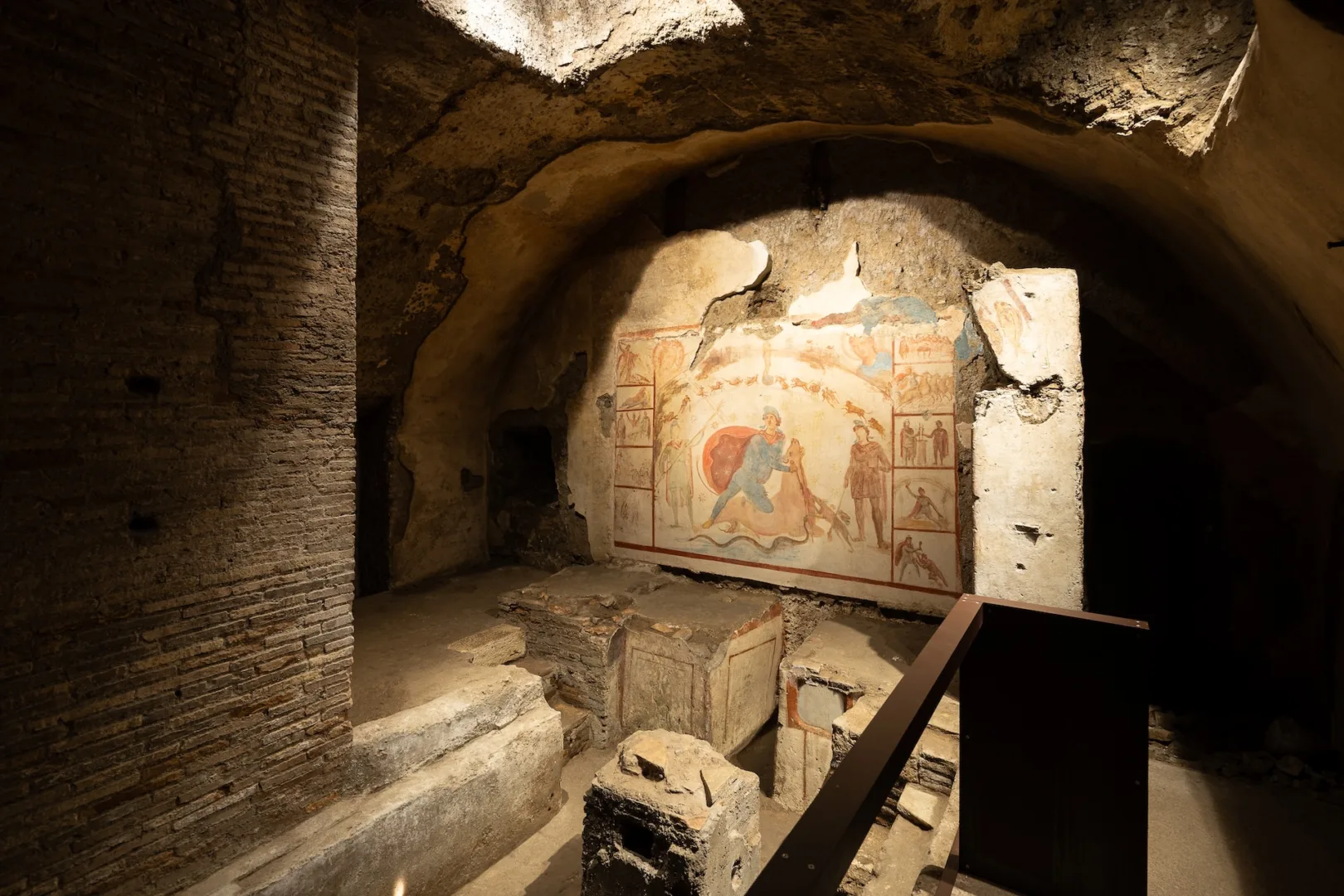
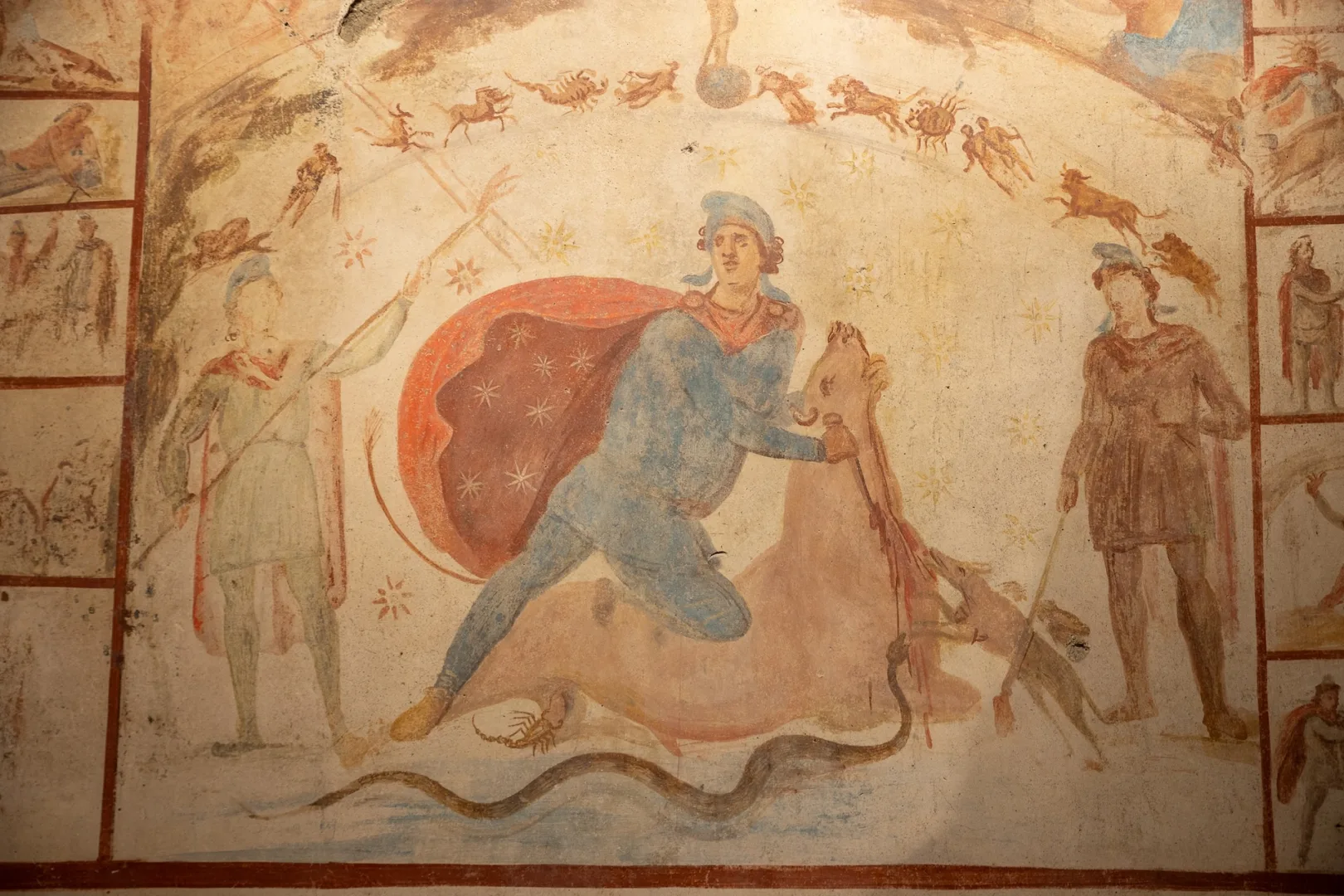
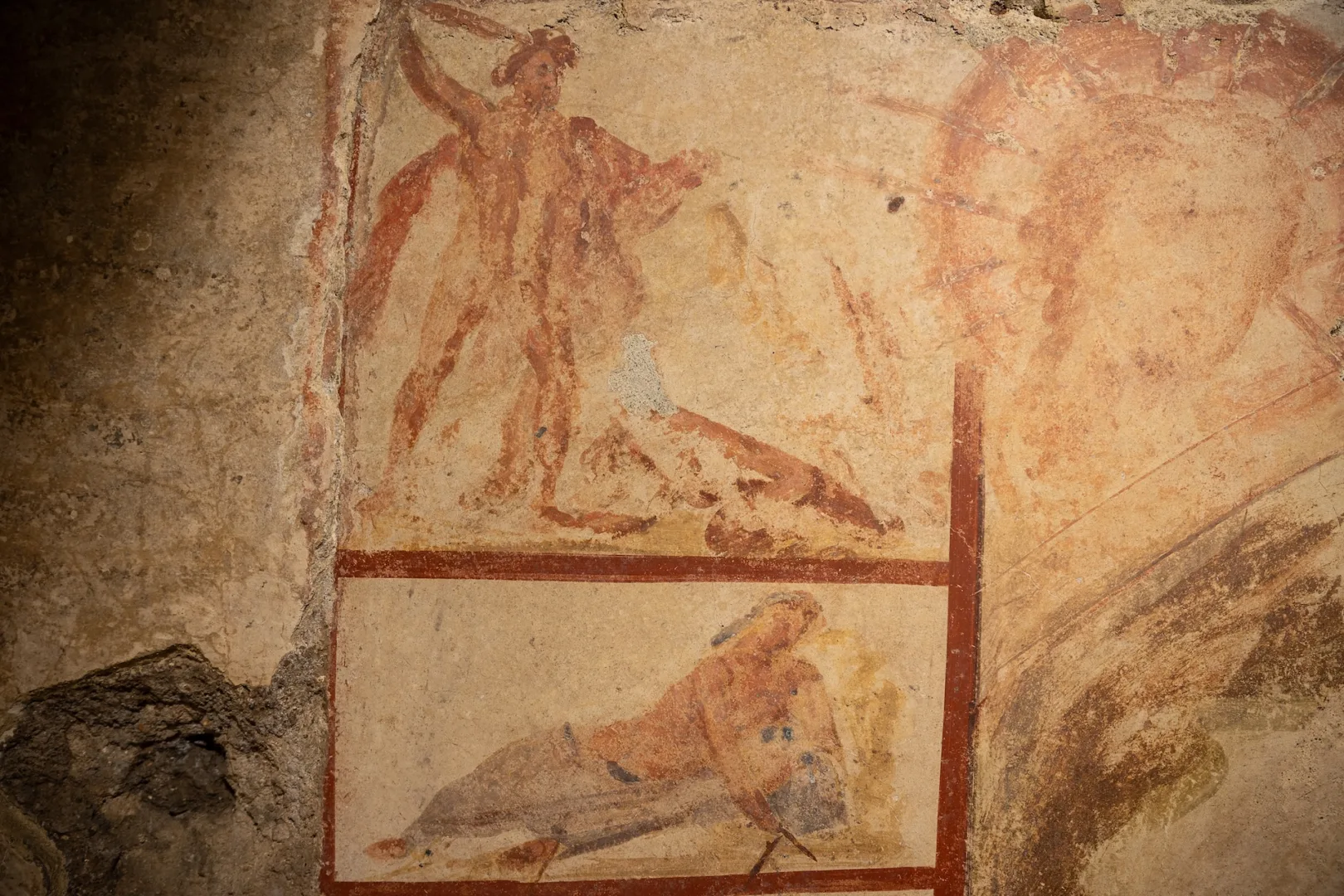
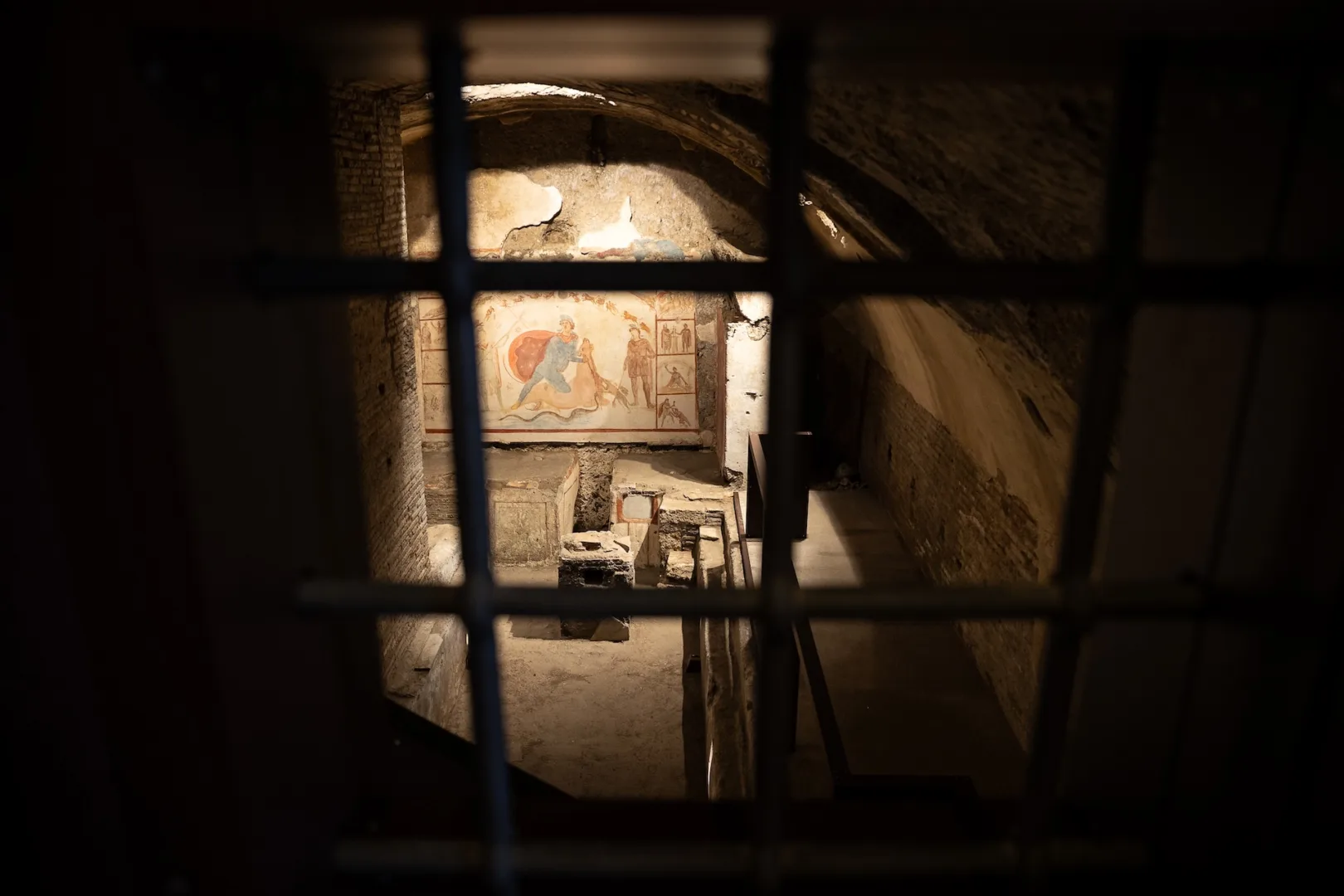
Reports of archaeological finds in the area around Palazzo Barberini date back to the 16th century, coinciding with the construction of several villas on the Quirinal Hill belonging to a number of prominent families. The reopening of the ancient Via Alta Semita and the restoration of the water supply in the area, both of which took place during the pontificate of Sixtus V (1585–1590), provided the impetus for the construction of these residences around the papal residence on the Quirinal Hill, justifying excavations and earthworks. Another fruitful period of discoveries – this time better documented than the previous ones – followed the choice of Rome as the capital of the newly established Kingdom of Italy (1871). Specifically, the construction of Via Nazionale and Via Quintino Sella completely transformed the urban landscape of the papal city between the Quirinal and the Viminale, yet led to the discovery of sites, spaces and objects hitherto unknown. The so-called ‘Mitreo Barberini’ was certainly part of a larger building and was discovered in the summer of 1936 during work on the construction of the Savorgnan di Brazzà building – now the headquarters of the Armed Forces Officers’ Club – in the area to the east of Palazzo Barberini, between the palace and the Salita di S. Nicola da Tolentino. Situated in the southernmost part of the Horti Sallustiani, the sanctuary was probably designed to enjoy both relative privacy and easy access to the nearby community gathering places. However, as it lay outside the boundaries of the pomerium, it may have occupied a liminal space—both politically and spiritually—in the minds of its earliest occupants. Finally, the structure’s proximity to a large cistern, several nymphaea and the more distant Baths of Diocletian had the advantage of ensuring a reliable supply of water, which the Mithraeum required for ritual purposes. Mithras is a deity of Indo-Iranian origin, associated with and contrasted against the god Varuna in the original pantheon: together, in fact, they represent the two aspects – diurnal and nocturnal – of the sky. One of the most distinctive features of Mithraism compared to other mystery religions is the practice of worship within an enclosed space. The traditional name for this specific type of sacred site is ‘mithraeum’, although some sources mention a number of synonyms, including speleum, antrum, crypta and templum. In the construction of mithraea, the needs of the local community and the conditions of the land on which they were built were usually taken into account. Moreover, these were generally small-scale structures, whose interiors were designed to meet the specific requirements of the cult. Even a brief overview of the myth, moreover, immediately highlights the role played by the motif of the cave in various episodes of the god’s life. Born in a cave, Mithras abducts a sacred bull to lead it to another cave, where he performs the sacrifice of the animal. Thus, for his followers, the speleum represented the mythical space in which the various moments of the salvific epic connected to the deity had taken place. In many cases, these buildings sought to replicate as faithfully as possible – in both materials and form – the appearance of a cave. The internal layout was designed to serve the activities held there. Among these, a central place was occupied by the liturgical practice of the sacred banquet, held in a main room generally of rectangular shape and fitted with a counter along both long sides, so as to allow the celebrants to take up an orderly position and participate effectively in the ceremonies. Other symbolic aspects attributable to the Mithraea can be found in their orientation in relation to the sun or the cardinal points, but also in their internal layout, in relation to which it is thought that Mithras presided over the central aisle, assisted by two lesser figures carrying torches (dadofori): Cautes on the right-hand side, and Cautopates on the left. Finally, many of the ornamental motifs found in the Mithraea, such as zodiacal or astrological elements, vividly convey the idea of cosmic symbolism. The Cult of Mithras